Nobody looks at the stroke

Everyone talks about the colour. It is the least interesting thing in that building.
I walked into the Van Gogh Museum with the question the Rijksmuseum had left me the day before: how do you show exactness and the instant at the same time. I had the answer within three rooms. It has nothing to do with yellow.
It is the stroke. Not the hue, the direction.
Look at the heart of a sunflower up close. It isn't painted, it's planted. It is hundreds of short, upright marks that follow the direction of the seeds. The flower looks like a flower not because the colour is right, but because the paint grows the right way. Beside it, the petals are long, loose strokes, almost dry. The hand has two speeds on the same flower.
In the wheat, it is even clearer. The sheaves are not drawn and then filled in. Each ear of wheat is one brushstroke, curved and loaded with paint. The whole harvest is the same movement, repeated two thousand times. The field moves in waves because the hand moved in waves. The reaper in the middle is painted flat: a few areas of blue and green, outlined in black. The only still place in the painting is where the man is.
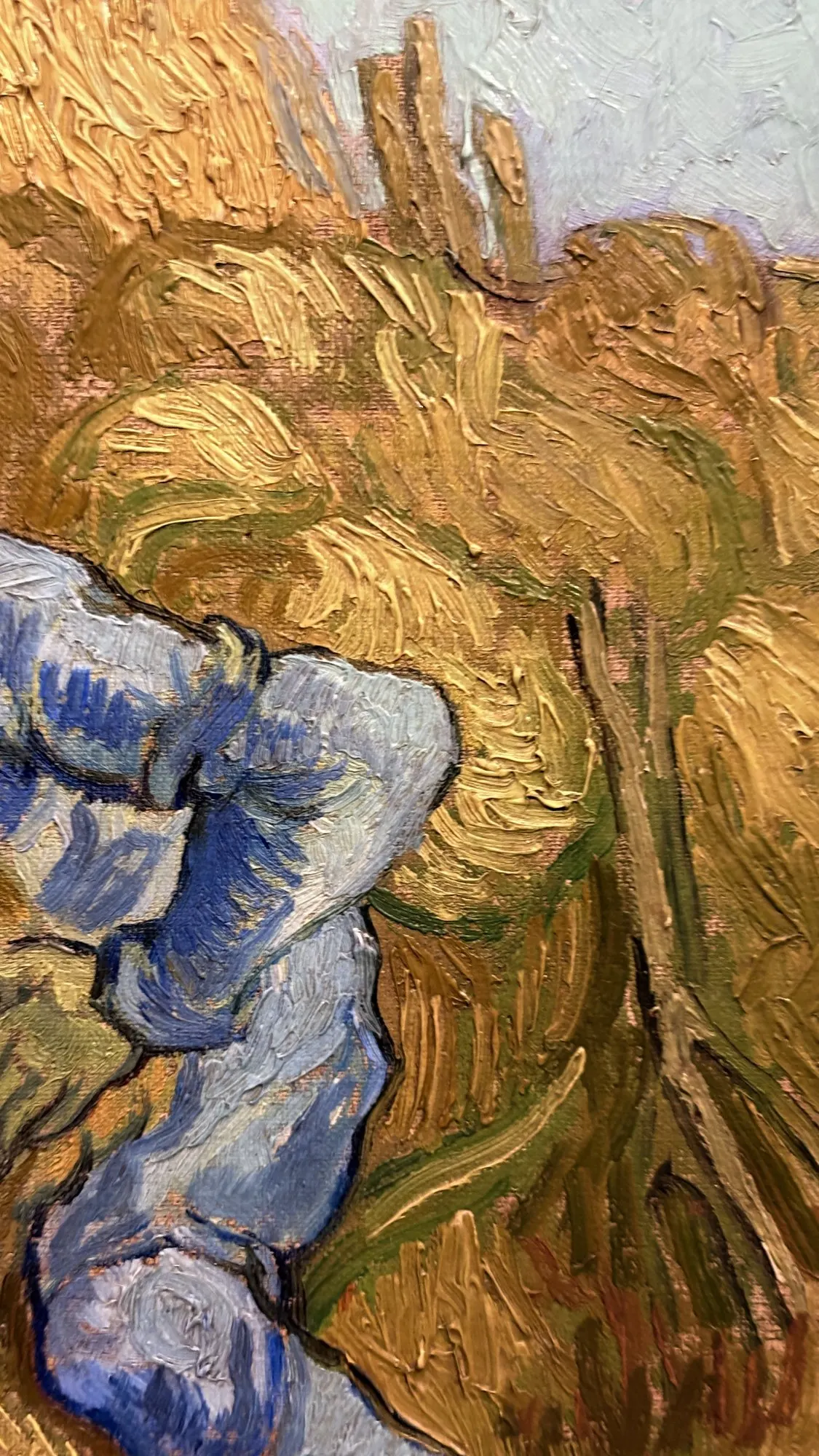
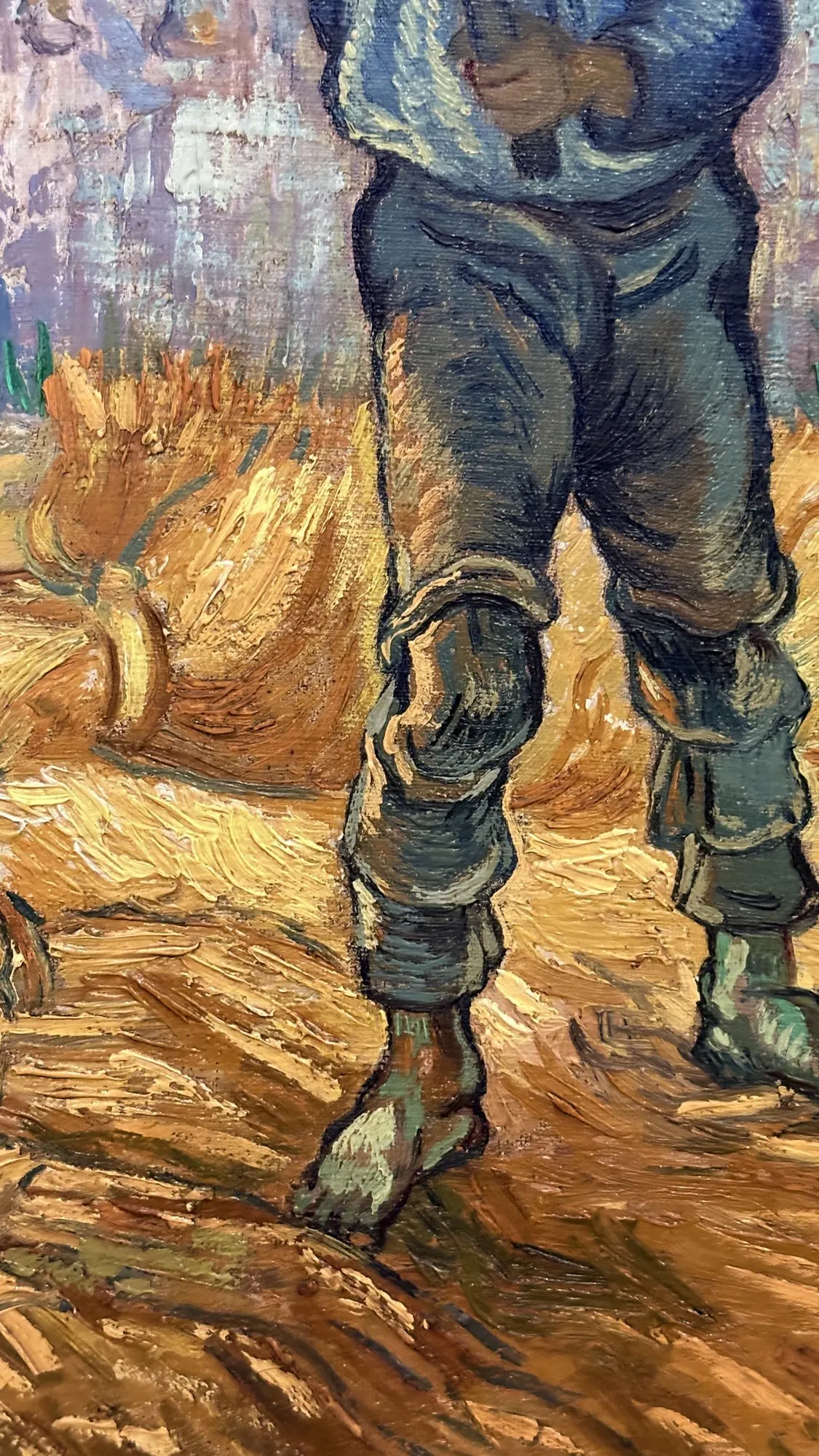
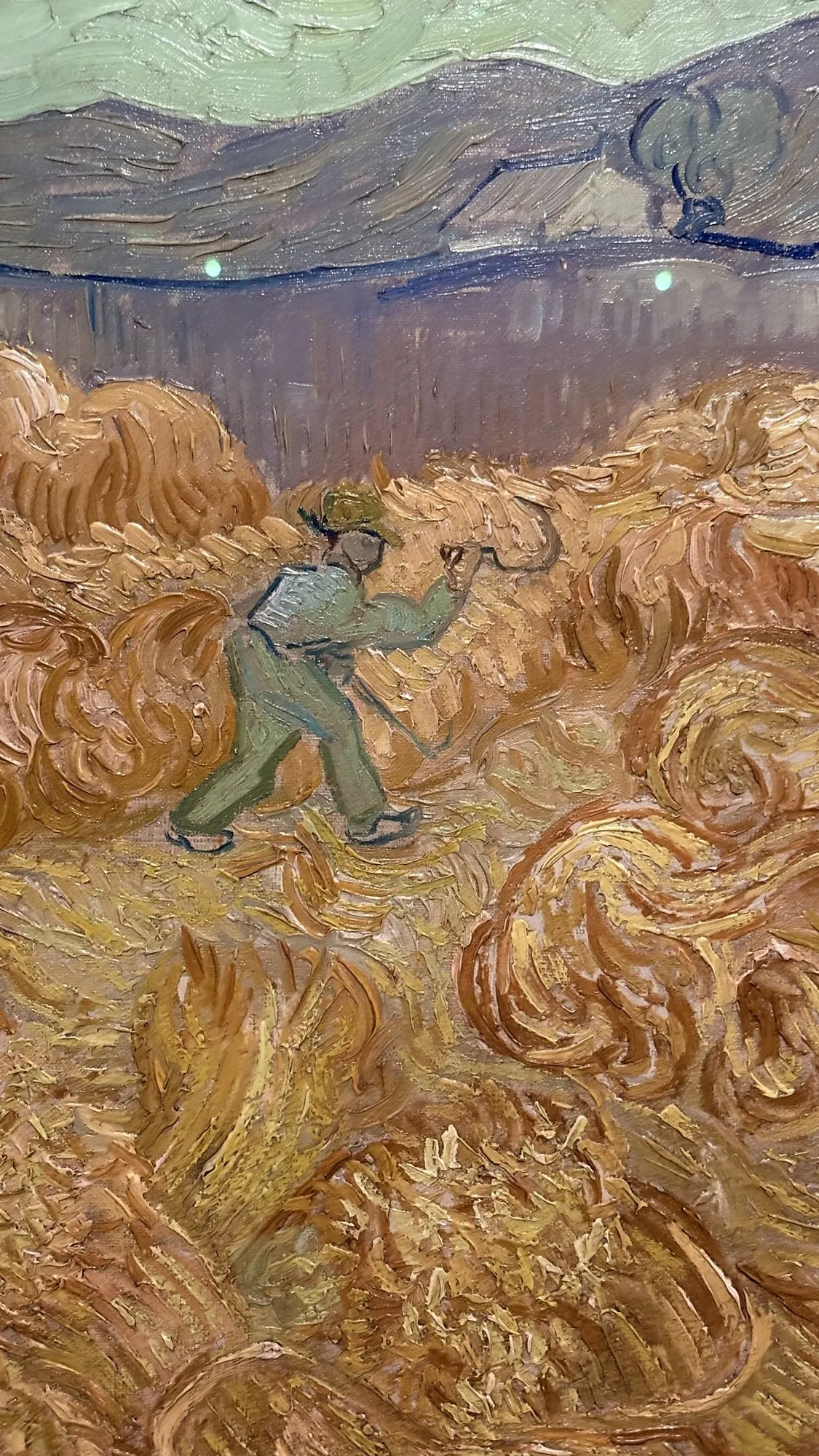
On some canvases, the paint no longer even touches the fabric underneath. It forms rolls and ridges. These ridges catch the museum lighting and cast their own shadow. The painting has relief, like a landscape. You cannot reproduce it. A photo of the painting loses exactly what makes it a painting.
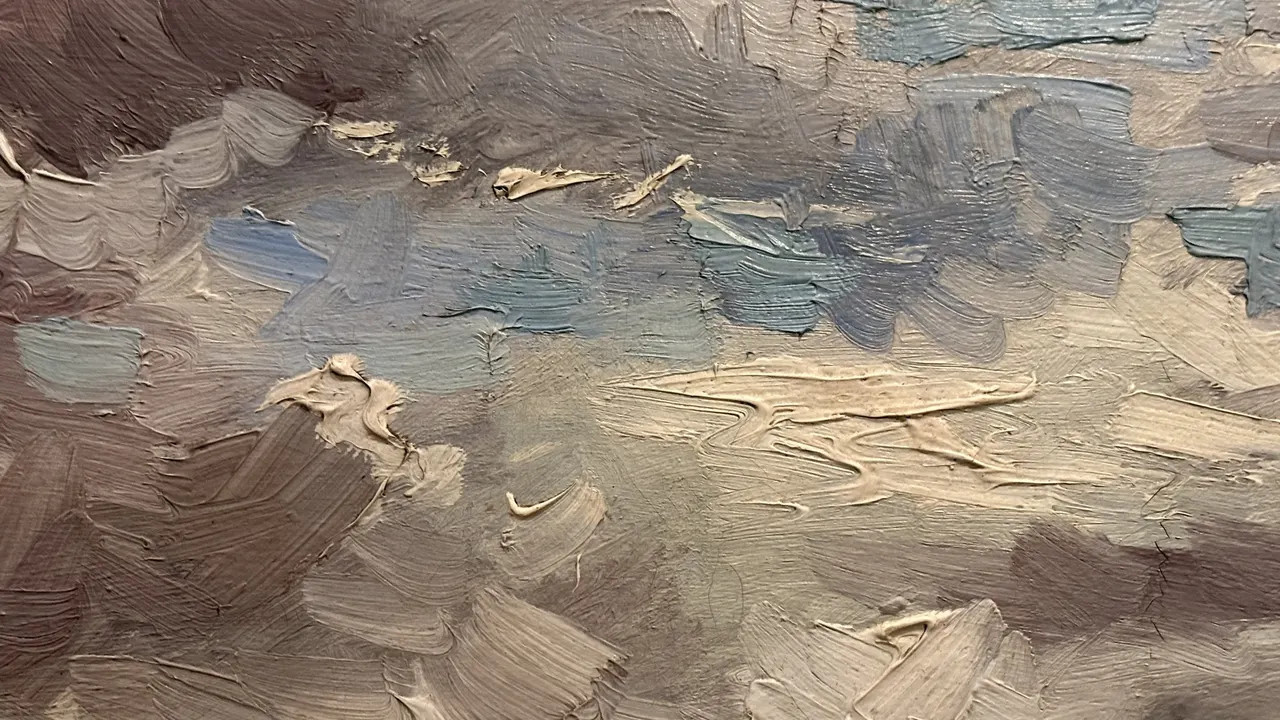
And then there are the drawings. They settle the question.
Three sheets of charcoal, with no colour at all. A cottage, two peasants, a path. The roof is made of zigzags. The trees are loops stacked like flames. The path is dashes running to the back, the grass is commas. Not one straight line anywhere. In real life, a thatched roof is straight. He drew it curved.
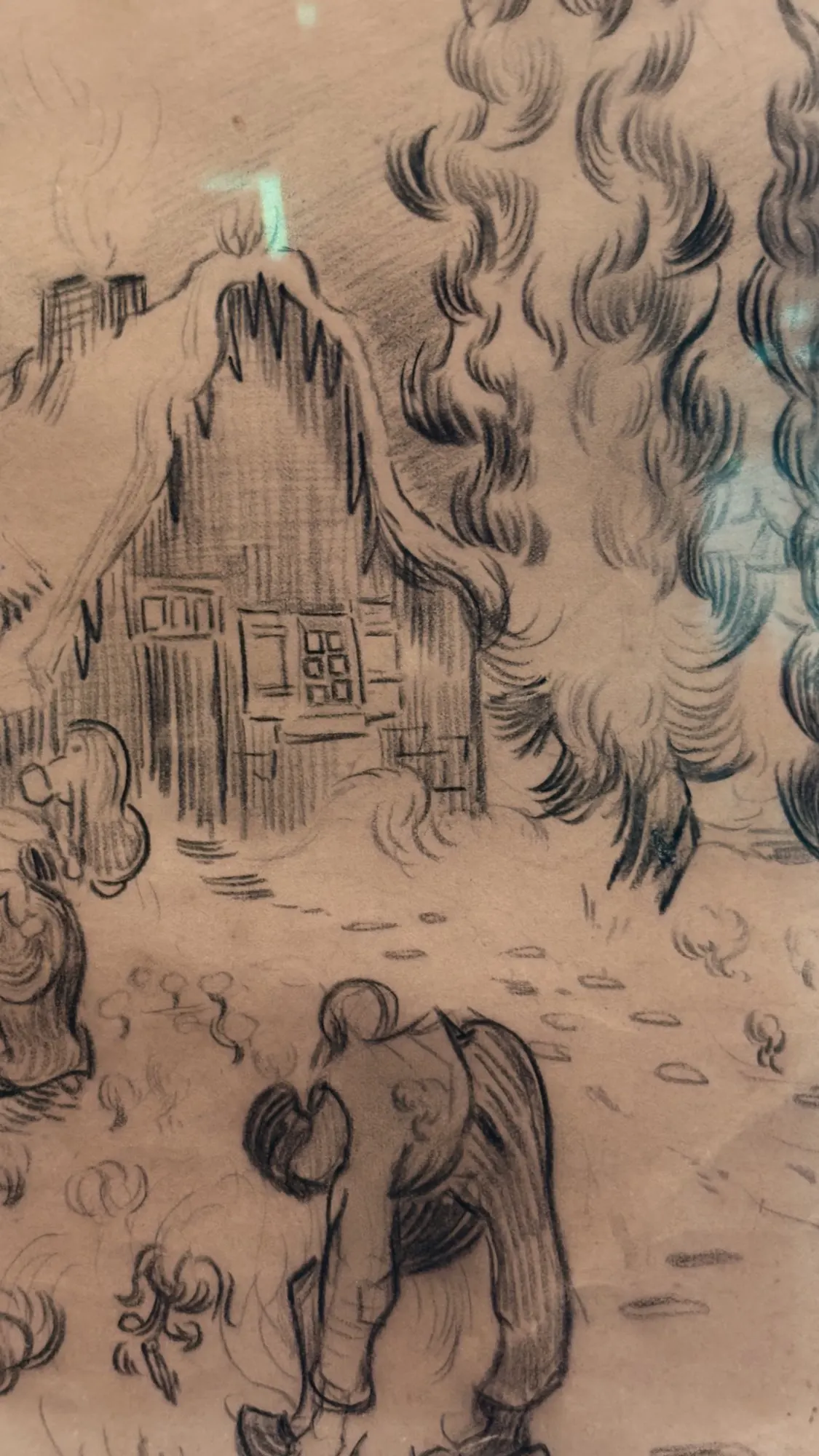
That isn't clumsiness. It's a decision. Everything must move, even what doesn't move. The colour is missing, and the movement is still there. So the movement was never in the colour.
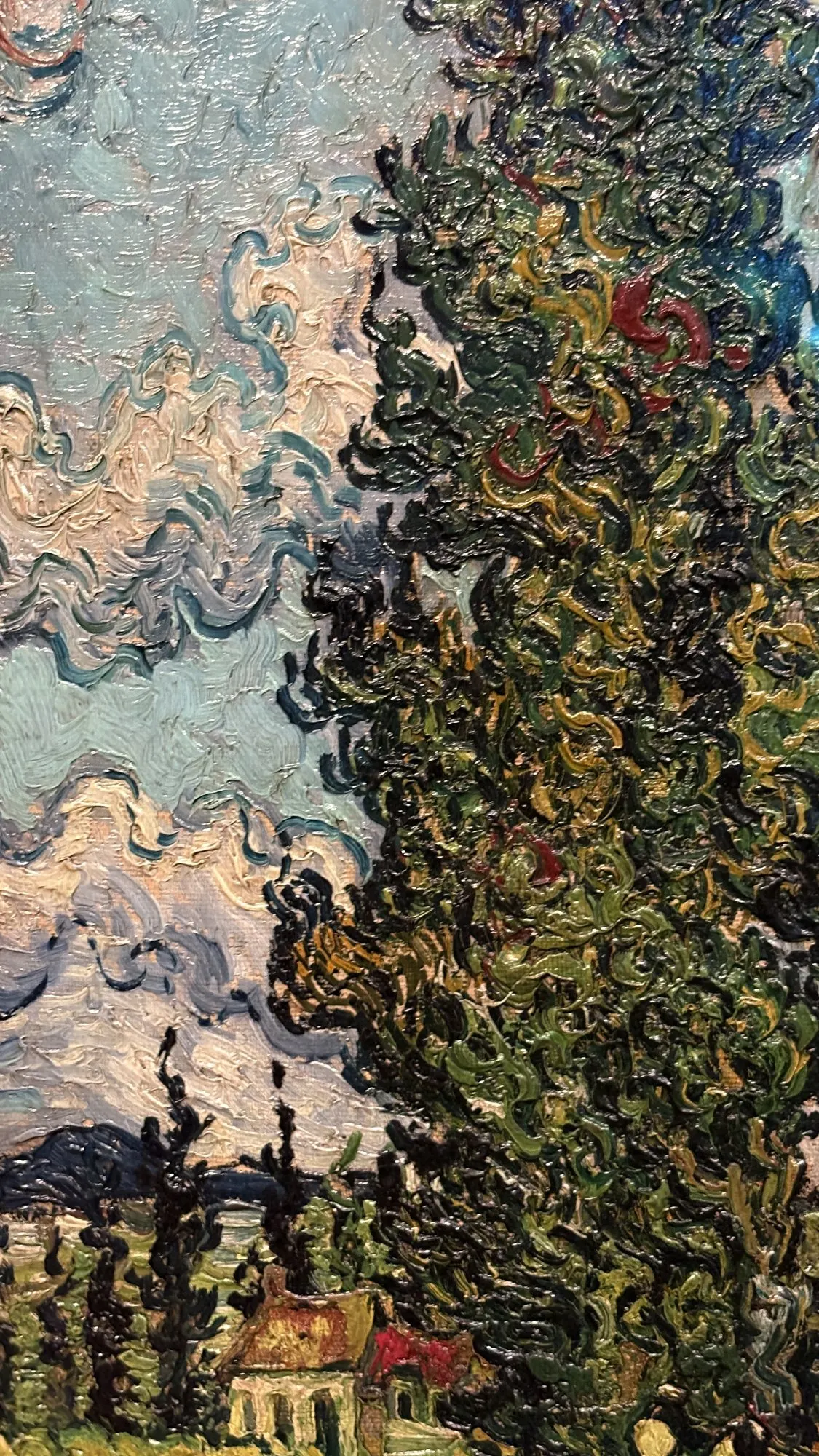
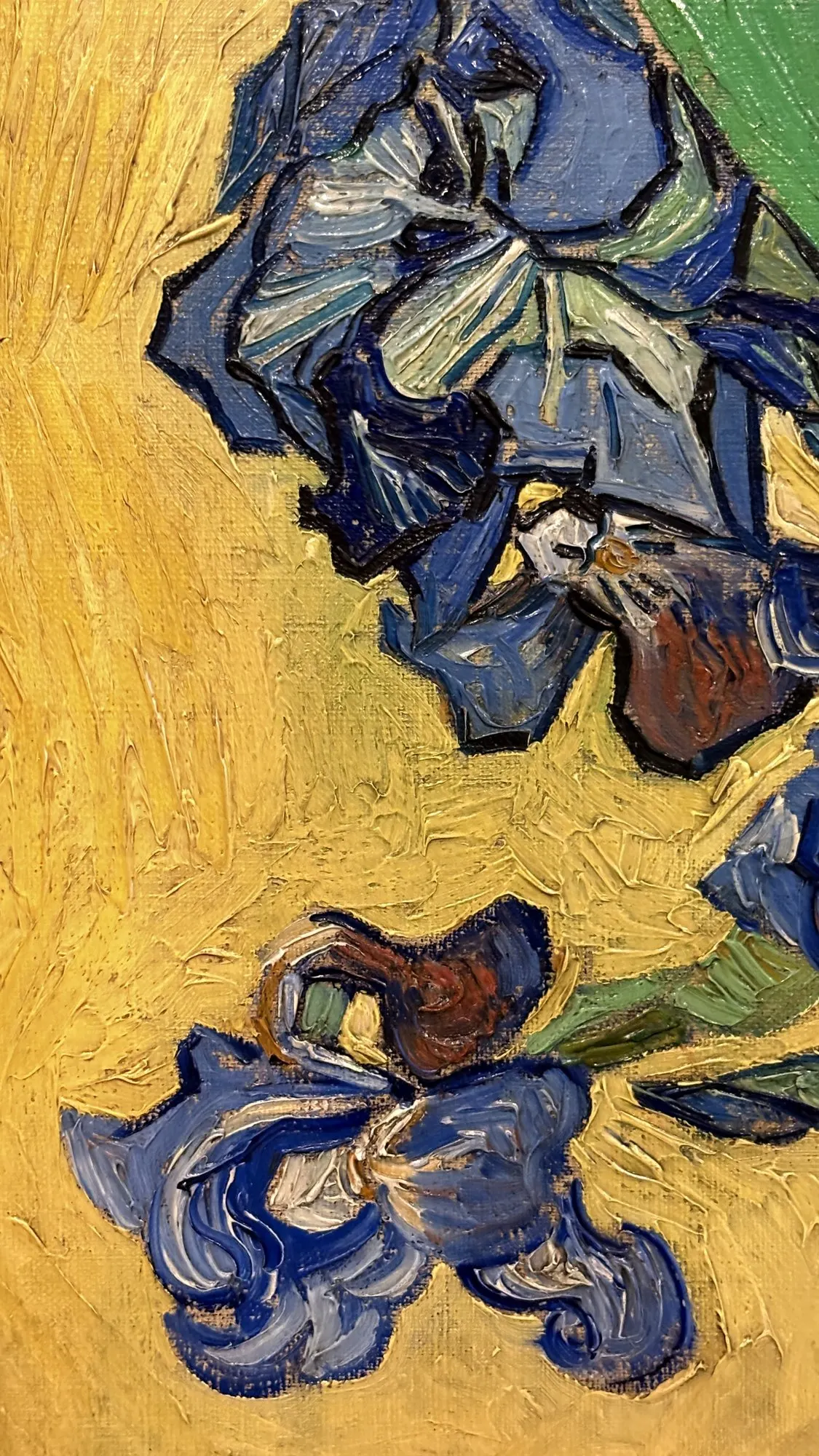
That is what has stayed with me since, as a photographer.
We photographers have no stroke. Our mark is made by a lens and a shutter. It is the same across the whole frame. No short touch here and long touch there, no impasto (paint laid on thick), no hand slowing down over a face and speeding up across a field. A photo file is flat by nature.
So, for us, what plays the part of the brushstroke? There are three candidates, and none of them is colour. Shutter speed: it decides what stays sharp and what blurs. Focal length, meaning a shorter or longer lens: it decides what is squeezed together and what is kept apart. And where you stand, which decides everything else.
It isn't much. Three decisions against two thousand brushstrokes. But they are the only ones we have. And I spend far too much time on things that aren't among them.
So the question I'm taking away from that room: when someone looks at one of my images very closely, what do they see that came from me?

