Twelve degrees

Amsterdam, 6 August 2026 · planning an evening so you can stop thinking about it
In Amsterdam, you know where to go. The canals are on every map. The bridges are numbered. There is even one exact spot where everyone takes the same photo. The scouting was done long ago, by other people.
What hasn't been done is the order.
I had one evening, one camera body and one lens. One decision was left: which way to walk. I planned it with Claude, in four steps. The answer comes down to one number: twelve degrees.
1 · The hours
First, the limits. Sunset at 21:22. End of civil twilight at 22:03. Civil twilight is the time after sunset when the sky still gives light. After 22:03, the sky gives nothing and the city has to light itself. End of nautical twilight at 22:57.
For my evening, two of these limits matter: sunset (21:22) and the end of civil twilight (22:03). They split the evening into three kinds of light: the sun, then twilight, then the city on its own. The end of nautical twilight (22:57) comes after my last photo. Not three ideas: three physical kinds of light, with set times. The evening had its structure before I even went out.
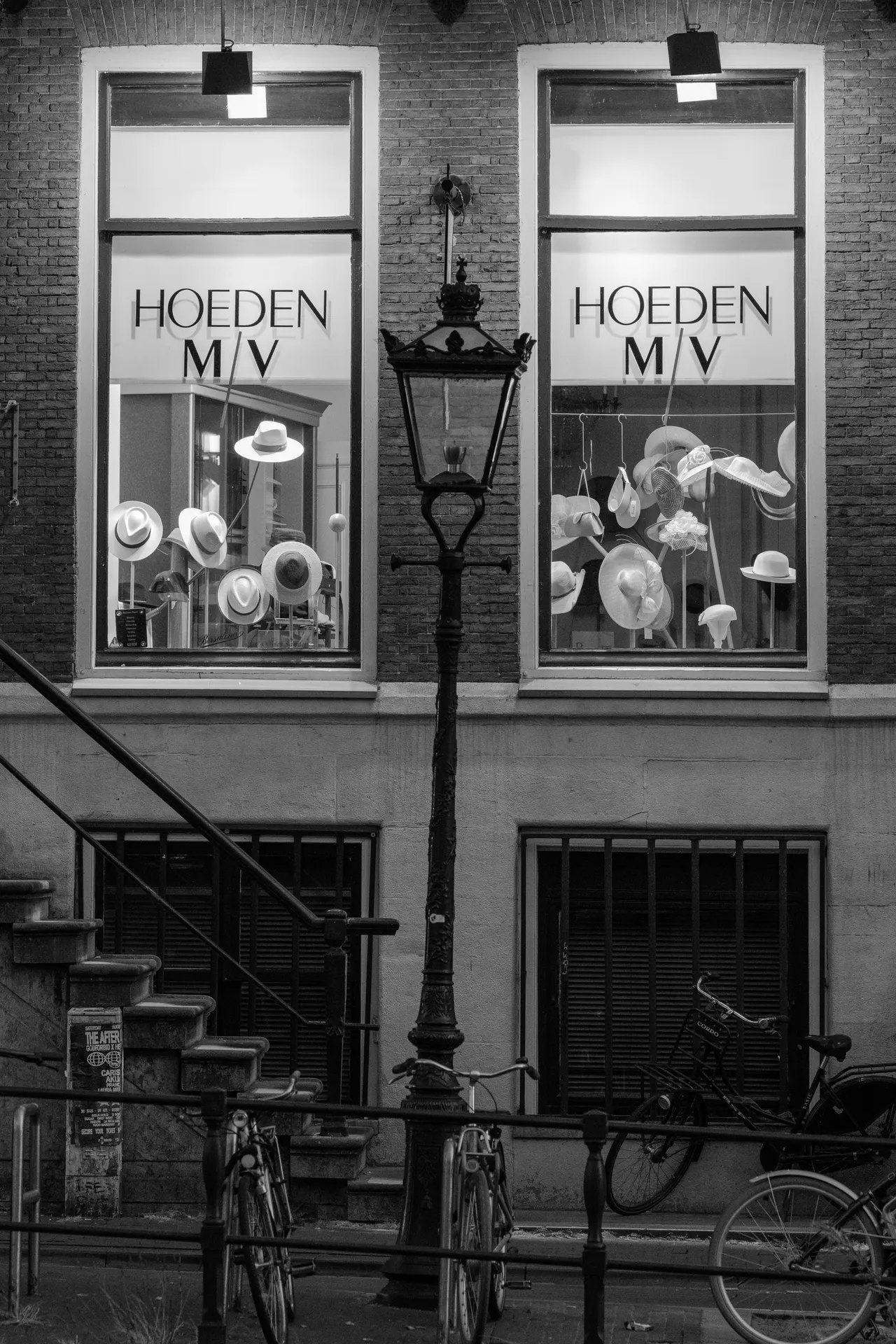
2 · The orientation
This is the step that decides everything. It is also the only one you cannot improvise on the spot.
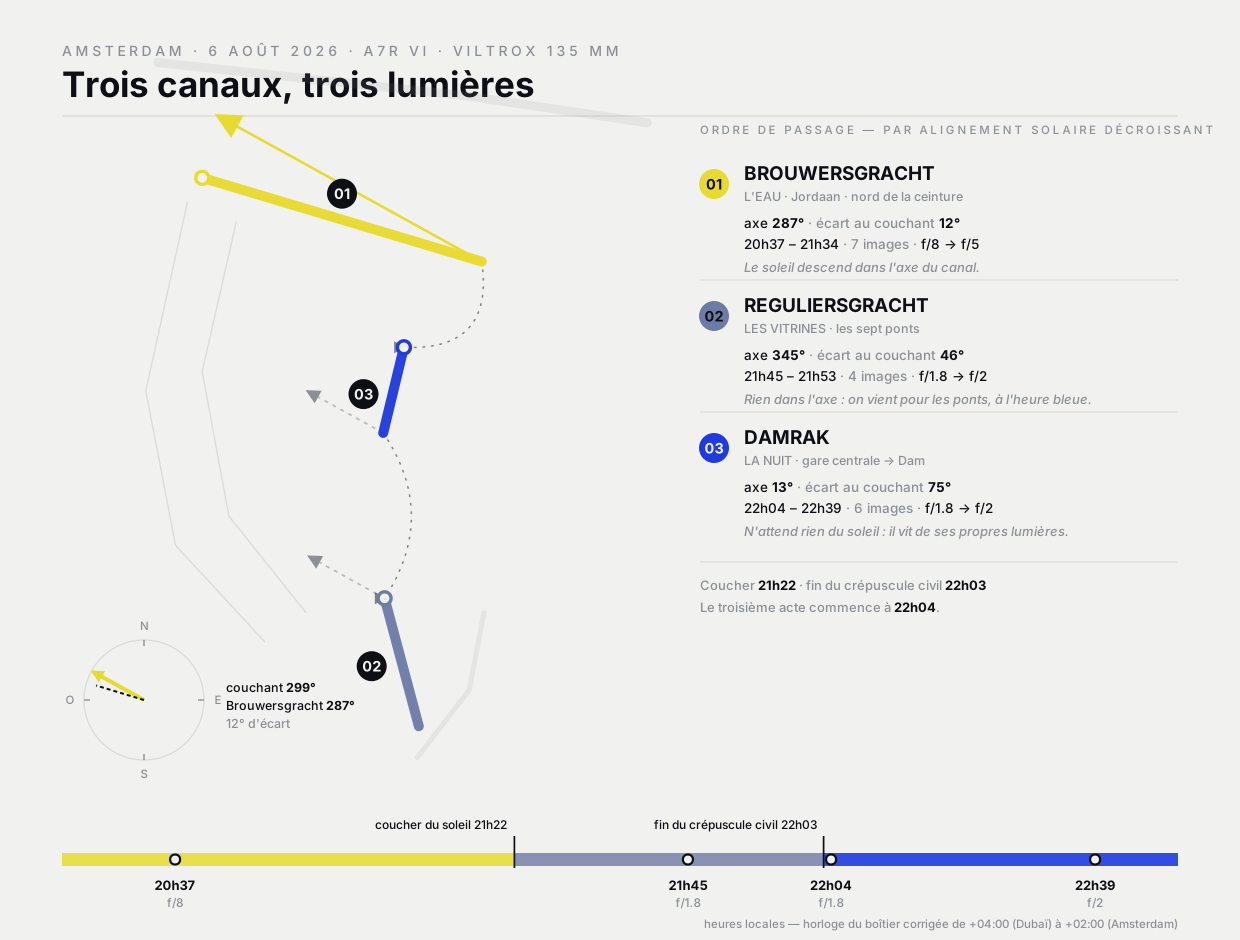
On 6 August, the sun sets at 299°, west-north-west. This number is a compass direction: 0° is north, 270° is west. Next, you need to know which canals face that way. A canal lined up with the sunset puts the sun down the water. A canal at a right angle gives you nothing at all.
- Brouwersgracht — axis 287°. Twelve degrees off.
- Reguliersgracht — axis 345°. Forty-six degrees.
- Damrak — axis 13°. Seventy-five degrees.
Only one canal in the centre lines up with the sunset. Only one.
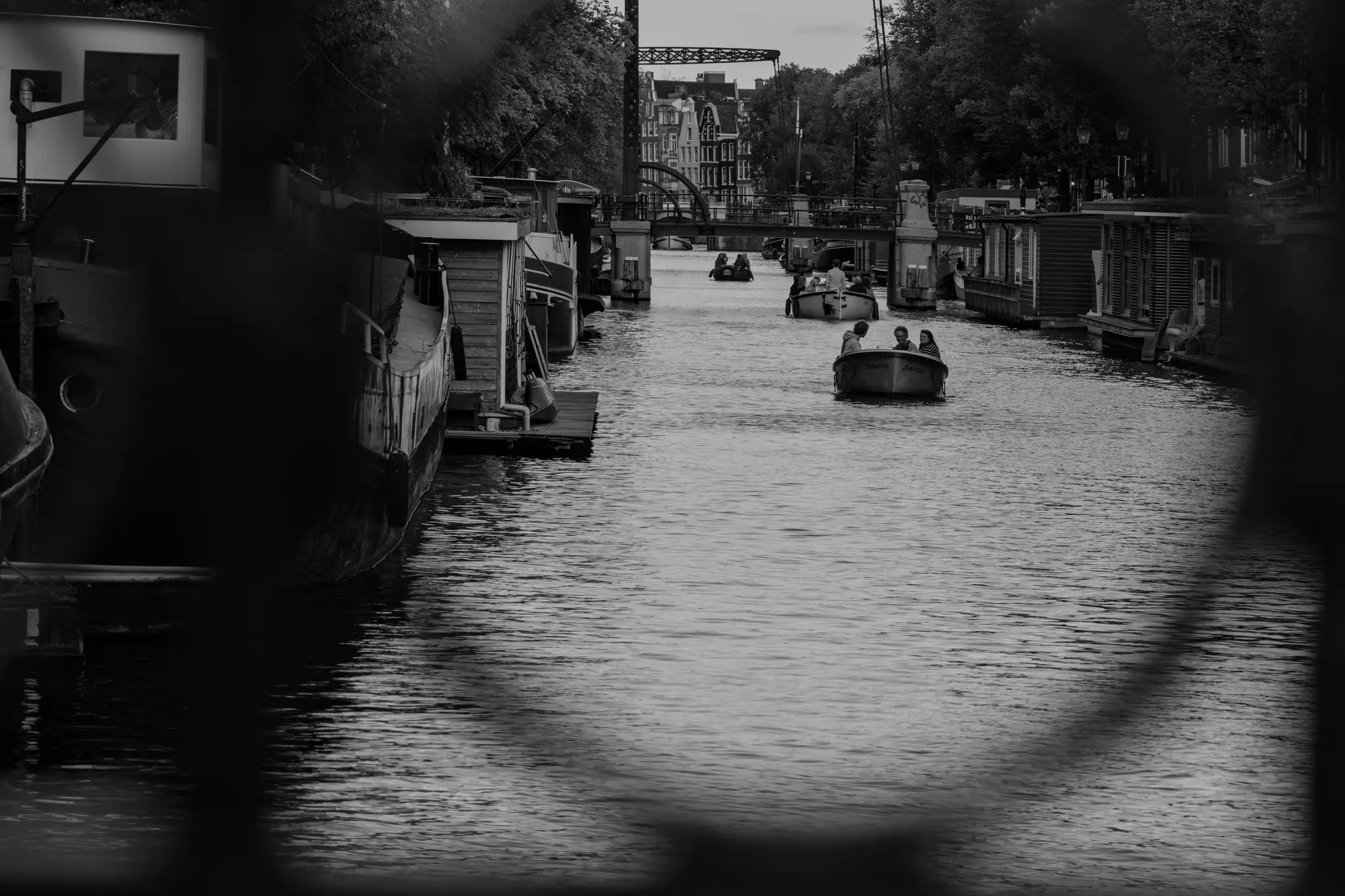
3 · The lens
A 135 mm, and nothing else. It is a telephoto lens: it brings far things closer.
The choice isn't about looks. It comes from the ground. In Amsterdam, you can't get closer: there is a canal between you and the subject, and no way around it. The telephoto turns that limit into a method. You don't go to the scene. You wait for it to come into place. It opens to f/1.8, so it lets in a lot of light. It lasts to the end of the night without raising ISO, which means without pushing the sensor's sensitivity, which damages the image.
One lens is also one less decision to make every thirty seconds.
4 · The route
The route isn't a line. It's a ranking.
Take the canals from best to worst lined up with the sun. Brouwersgracht first, while there is still sun in its axis. Reguliersgracht next, at blue hour, when the sky turns deep blue after sunset. It expects nothing from the sun, but a lot from its seven bridges. Damrak last. At seventy-five degrees off, it never had anything to expect from the sun. It lives on its own lights. It is the only one that loses nothing by coming last.
What disappears first goes first. That's all.
What the files say
First photo at 20:37, at f/8, with the sun still five degrees above the horizon. Last photo at 22:39. Two hours and two minutes.
In between, the aperture tells the evening on its own: f/8 → f/5.6 → f/5 → f/2 → f/1.8. The smaller the number, the wider the lens is open. I opened by three and a third stops (one stop is twice as much light), at exactly the rate the sun went down. I did not think about exposure once. The preparation was thinking for me.
And there is one coincidence I hadn't planned. The third act starts on a file stamped 22:04: the people, full dark, the Damrak. Civil twilight ended at 22:03.
One minute. I didn't choose where the acts break. The sky did. I just turned up on time.
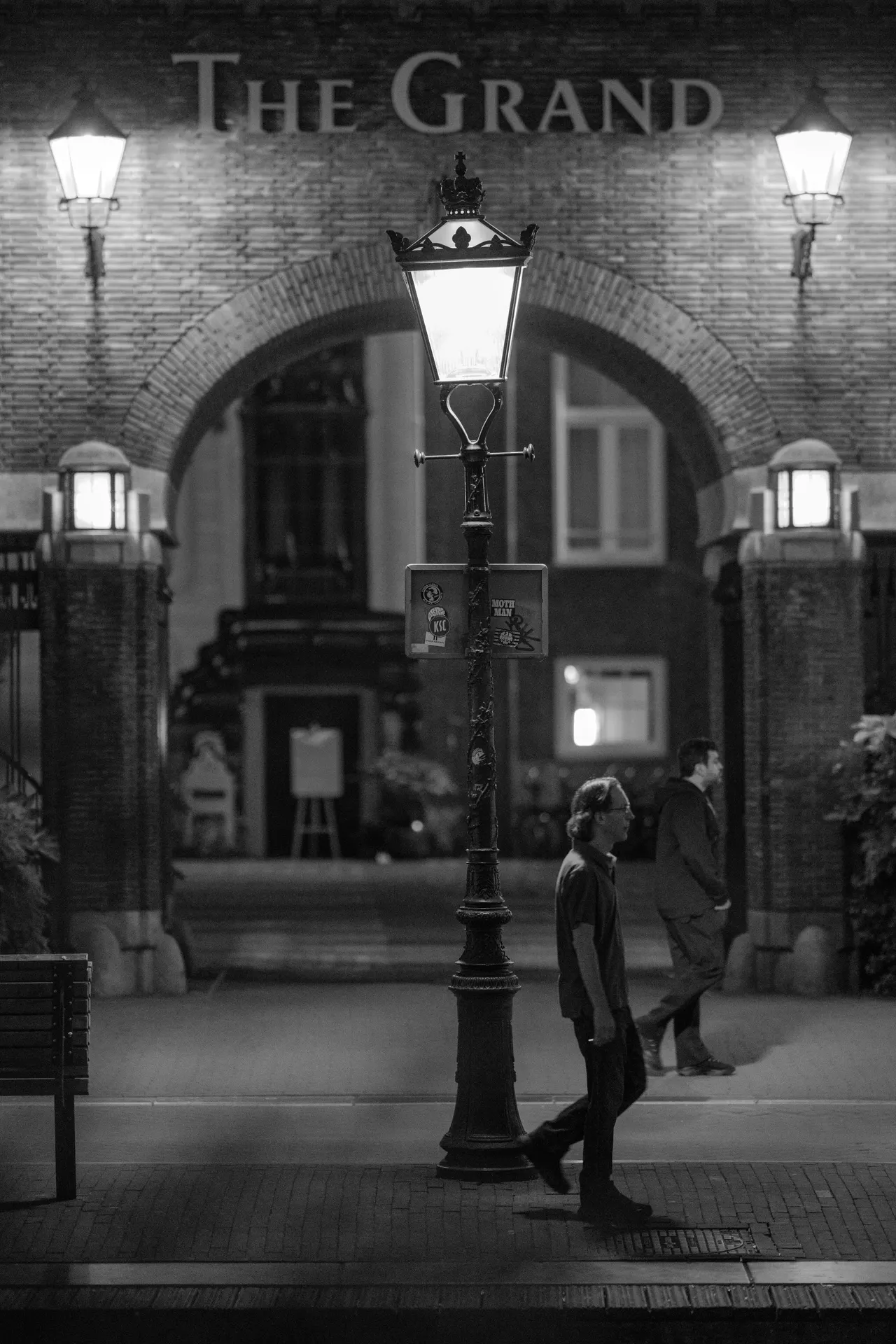
Where it broke
Of the seventeen published photos, sixteen were taken on the 135 mm.
The seventeenth was taken at 21:45, on the 16 mm, a wide-angle lens, wide open. No preparation produced that one. Something happened that was too wide and too close for a telephoto. I changed lenses. It cost me two minutes of the best light of the evening.
I'm keeping it. It's the only photo in the series the plan doesn't explain.
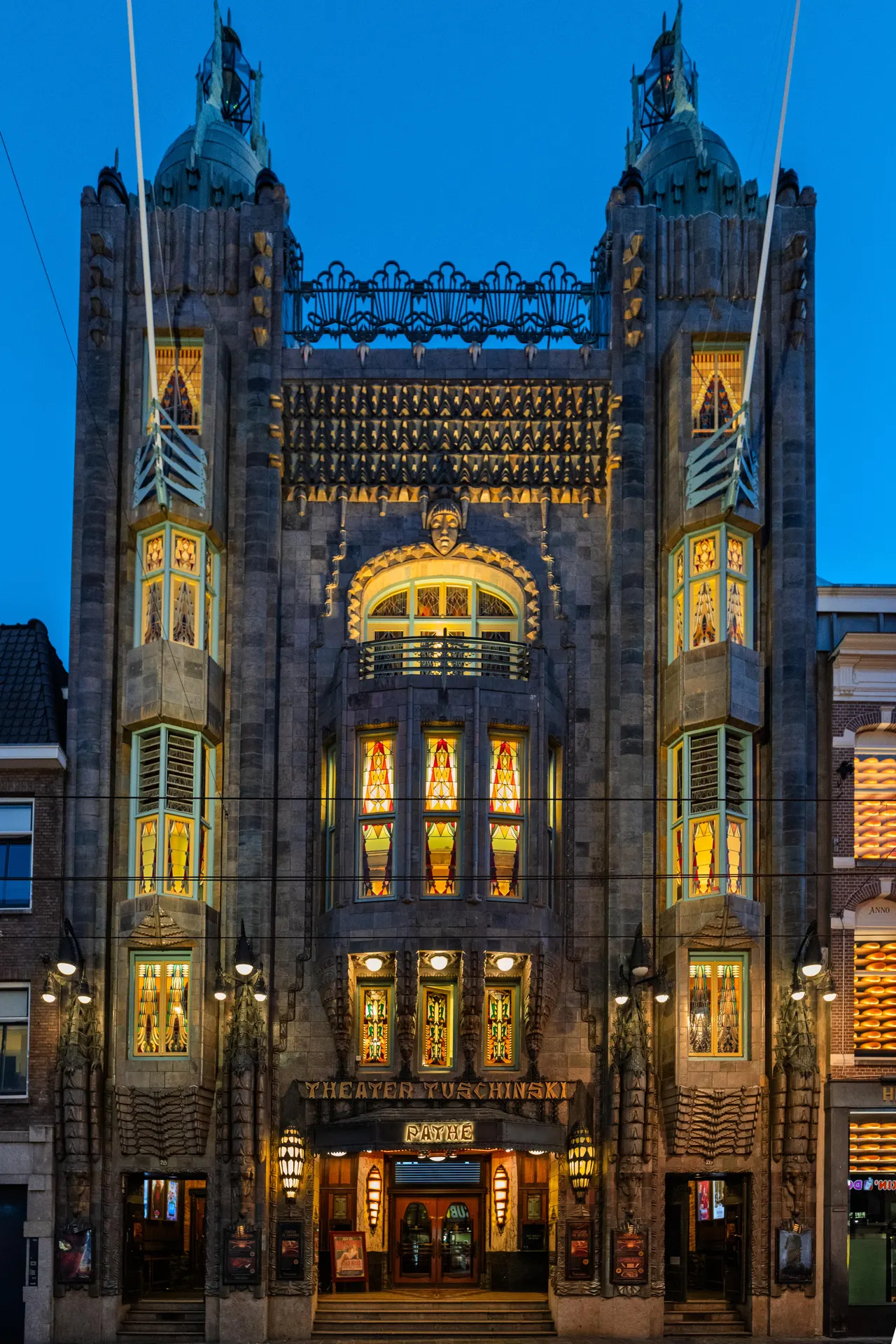
What preparation is really for
It doesn't tell you what to photograph. It never did. Across these seventeen photos, it chose nothing at all.
It is for one thing. When something happens, you don't have to work out where you are, what time it is, how long is left, or how far to open. All those answers were ready before eight in the evening.
So: on your next outing, how many decisions do you still plan to make in the street? And how many could you have made at home?